

Beyond “Sound”: Rethinking How We Describe the Cello
There’s a subtle but consequential problem in how we talk about instruments—especially bowed strings. Ask a player or maker, “How does this cello sound?” and you’ll often get answers like warm, dark, focused, rich. These words are familiar, even comforting. But they are also deeply misleading.
They imply that sound is a static property, something the instrument has, like a color or a finish. And that’s precisely the problem.
No serious dancer is evaluated by asking, “How do they look?” Dance is not a painting. It is an unfolding of forces, timing, balance, and coordination. We understand—intuitively—that describing a dancer requires kinetic language, not visual adjectives.
The same shift needs to happen in how we talk about instruments.
The Core Misconception: Sound as Object
When we describe a cello as “warm” or “bright,” we collapse a complex, time-dependent phenomenon into a single static label. But acoustically, this is indefensible.
A cello does not produce a fixed “sound.” It executes a sequence of physical events:
-
A bow excites a string through stick-slip motion
-
Energy transfers through the bridge into the body
-
Plates vibrate in complex modal patterns
-
Air resonances couple and radiate outward
-
Frequencies emerge, interact, and decay over time
What we perceive as “tone” is actually a temporal behavior—a structured unfolding of energy.
So the better question is not:
“How does this cello sound?”
But:
“How does this cello behave?”

A Useful Analogy: The Cello and the Dancer
Consider a ballet dancer.
We don’t evaluate them based on a snapshot. We don’t say, “They look good,” and leave it there—at least not if we care about the craft. Instead, we attend to:
-
How movement is initiated
-
How force is transferred
-
How momentum is sustained or dissipated
-
How timing is controlled
-
How transitions are executed
In other words, we perceive organized motion over time.
Now consider the cello:
-
How does the tone begin (attack)?
-
How does it develop (spectral enrichment)?
-
How does it stabilize (resonant bloom)?
-
How does it decay (damping behavior)?
These are not metaphors. They are directly analogous structures.
| Ballet Dancer | Cello |
|---|---|
| Initiation of movement | Bow-string attack transient |
| Momentum and flow | Energy transfer across modes |
| Suspension in a leap | Resonant bloom |
| Controlled landing | Damping and decay |
Both are systems that execute temporal processes under constraint.
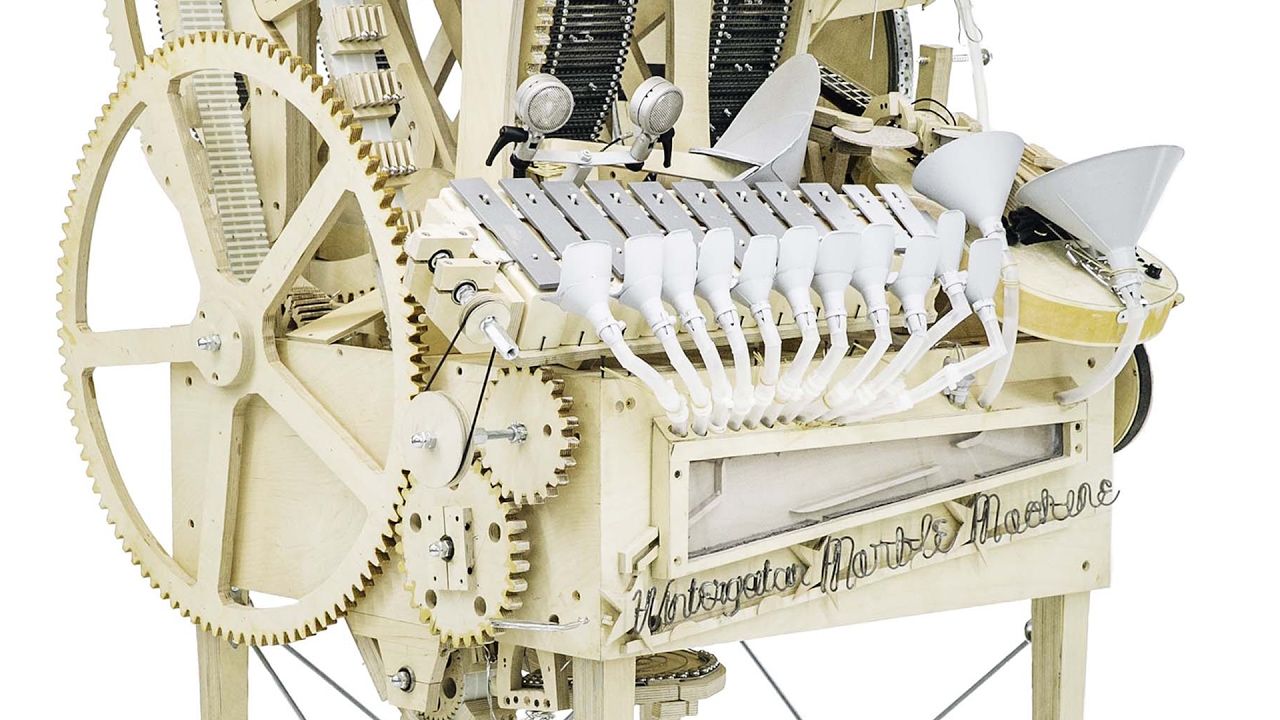
The Instrument as a Machine
It may feel reductive to call a cello a “machine,” but in this context, it’s clarifying.
The cello is a mechanical system designed to:
-
Transform energy (bow input)
-
Distribute it across materials (wood, air)
-
Organize it through resonance (modal behavior)
-
Emit it as structured sound waves
Its behavior is governed by:
-
Plate stiffness and thickness
-
Wood anisotropy
-
Modal density and coupling
-
Damping characteristics
-
Bridge filtering effects
This is not abstraction—it’s the actual mechanism behind what we hear.
And just like a dancer working within gravity, anatomy, and balance, the cello operates within physical constraints that shape its behavior.
Why Traditional Language Falls Short
Descriptors like warm, dark, or open fail for three reasons:
1. They ignore time
They flatten a dynamic process into a static quality.
2. They obscure mechanism
They don’t tell us why the instrument behaves as it does.
3. They lack precision
Two people can mean entirely different things by the same word.
This leads to a communication gap—especially between players and makers.
A maker adjusts arching, thickness, or graduation.
A player says, “It feels a bit closed.”
There’s no shared framework.
Toward a More Useful Vocabulary
If we shift from object-based language to process-based language, new possibilities open up.
Instead of describing what the sound is, we describe what it does.
1. Attack Behavior
-
Fast attack with immediate spectral activation
-
Gradual onset with delayed harmonic emergence
2. Energy Transfer
-
Efficient coupling across registers
-
Localized response with limited propagation
3. Resonant Bloom
-
Progressive expansion of harmonic density
-
Early saturation with limited growth
4. Modal Interaction
-
High modal density with smooth transitions
-
Discrete modal peaks with uneven response
5. Sustain and Decay
-
Low damping with extended sustain
-
Rapid energy dissipation
6. Stability vs. Volatility
-
Stable resonance under varying input
-
Sensitive, fluctuating response
Listening Differently: A Phenomenological Shift
This isn’t just about better terminology—it’s about changing perception.
Instead of asking:
-
“Is this sound beautiful?”
We ask:
-
“How is energy being organized over time?”
-
“What is the trajectory of this tone?”
-
“Where does it resist, and where does it release?”
Listeners already perceive these things implicitly. The goal is to make that perception explicit and communicable.
Implications for Players and Makers
For Players
You gain:
-
More control over evaluation
-
Clearer communication with luthiers
-
A deeper understanding of response and resistance
For Makers
You gain:
-
More actionable feedback
-
A way to connect physical adjustments to perceptual outcomes
-
A shared language with performers
A Simple Reframe to Carry Forward
If there’s one idea to keep:
A cello does not have a sound. It executes an acoustic behavior over time.
And evaluating it is less like judging a painting—and more like watching a dancer.
Closing Thought
The moment we abandon static language, instruments become more intelligible. Not simpler—but clearer.
We stop asking what a cello is, and start understanding what it does.
And in that shift, communication between ear, hand, and material becomes far more precise—and far more meaningful.