

Anyone can pursue an ideal without constraints.
Stradivari never tried to make the world's best violin. And that's the most interesting thing about him.
The phone in your pocket is not the height of human achievement in mobile computing. It is a beautifully resolved product: a set of compromises tuned for manufacturability at scale, serviceability, cost, supply chain, and the ability to be iterated on next year. If a lab were told to build the most powerful, most efficient mobile device physically possible and cost, yield, and repairability were no object, the result would not look like what's in your pocket. It would also not be less impressive as a human achievement. It would be a different achievement, aimed at a different target.
That is Antonio Stradivari. The instrument in your case was not built to be the best violin that could possibly exist. It was built to be an excellent violin that a small shop could produce forty times a decade, to a consistent standard, with divided labor, from locally available wood, to a form that was already fixed before the maker was born — and then repaired and updated for three hundred years. The reason that's worth saying out loud is that most of the string-playing public believes the opposite, and the belief has cost the field about two centuries of misdirected research.
The wrong artifact
Ask a player what makes a Strad a Strad and you'll get answers about varnish, about the wood, about little ice ages and fungal treatment and graduation patterns. Every one of those answers assumes the secret is in the violin, because where else would it be. We have graduated plates to the tenth of a millimeter, run varnish through mass spectrometry, and CT-scanned the boxes.
But the most important object in this history is not a violin. It's a shaped slab of wood, cut to an outline, lettered and dated by the man who used it, and pulled out of every instrument it ever built before that instrument existed.
That's the internal form — the forma. You glue your corner and end blocks to it, bend and fit the ribs around it, glue on the linings, and then you take the whole garland off the form and fit your carved plates to it. Alongside it sits a set of flat templates: paper, card and metal patterns for the outline, the f-holes, the scroll volute, the arching sections. The form fixes the rib structure. The templates fix everything else.
Modern manufacturing has exact words for these and violin history has never bothered to borrow them. The form is a fixture. The templates are gauges. What they do together is move accuracy out of the worker's hands and into the shop's equipment. That is the defining move of industrial production, and it happened in Cremona in the 1540s, which is roughly two hundred years before anyone thinks industrial production started.

Two ways to make a violin
Andrea Amati built on an internal mould, and the result was unusual consistency across his output. The Amatis established a method — internal mould, blocks glued to it — by which you can repeat the same outline time after time, and Brescia did not have this.
The Brescian contrast is worth getting right, because the version you usually hear is wrong. Gasparo da Salò and Maggini weren't routing a groove in a plate and setting the ribs into it; that's a viol trait. What the surviving instruments suggest is simpler and far more consequential: Gasparo's and Maggini's violins and violas lack the small platforms on the plates where end blocks would glue, which supports a reconstruction where the top plate is finished first and the ribs glued straight onto it — no mould at all.
Plates first, no form. Every hand-built one at a time, each one a fresh negotiation between the maker's eye and the wood in front of him.
Now — and this is the part players find hard — Gasparo and Maggini were not worse makers. Maggini's violas are among the finest bowed instruments anyone has ever built, and both Stradivari and del Gesù were looking hard at them. What Brescia lacked wasn't talent. It was transmissibility. The knowledge lived in hands, and hands die.
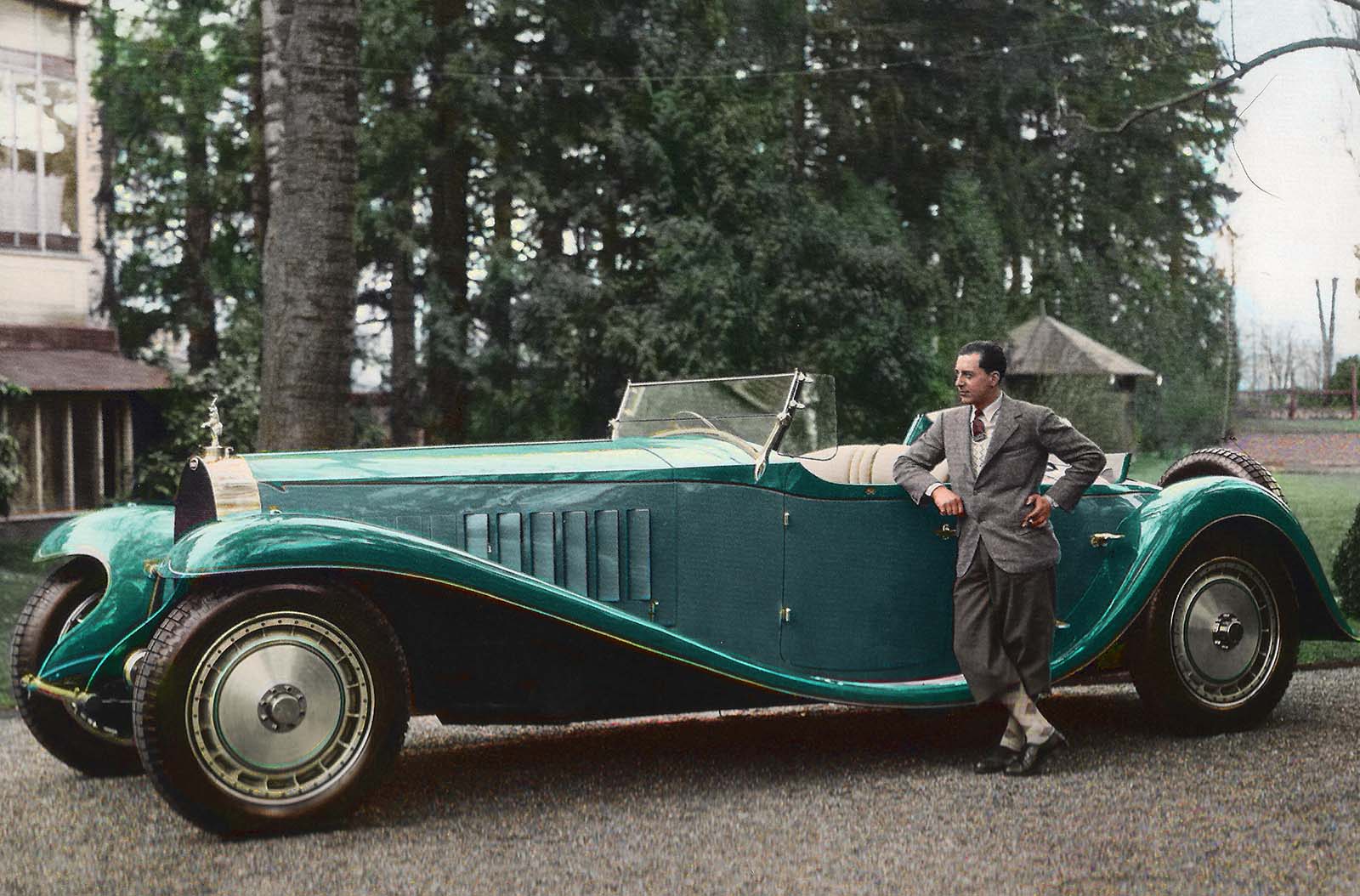
If you want the industrial analogue: Bugatti built cars that no connoisseur has ever claimed were surpassed, by methods that could not survive Ettore Bugatti. Masterpieces, no repeatable process, and nothing underneath when the founder's judgment was withdrawn. Cremona's early instruments were arguably no better than Brescia's. Cremona's system was categorically better, and within two generations that gap had flipped the quality ranking too — because a transmissible method compounds and a tacit one doesn't.
The method was imported, and it was already industrial
Here's where the product framing stops being an analogy and starts being history.
The form didn't originate in violin making. It came from the lute trade, and for a hard structural reason: a lute bowl is built from many thin staves glued edge to edge over a mould, by a technique closer to small boat-building than to the carved or bent construction of guitars and violins. For a lute the mould isn't an efficiency — it's the only way to hold twenty-odd staves in a compound curve while the glue dries. So the plucked-instrument trade had a couple of centuries of mould discipline before anybody thought to point it at a bowed box. (And not the guitar, incidentally — the Spanish tradition builds top-first on a flat workboard, which puts it on Brescia's side of the line, not Cremona's.)
The route is documented. Füssen in Bavaria was the lute-making capital of sixteenth-century Europe; its guild capped the town at twenty workshops, and that cap pushed makers south over the Alps into Venice, then Bologna and Padua. German lute makers were working in northern Italy through exactly the decades Andrea Amati was learning his trade.
And they weren't working like artisans. They were working like a company.
The document that proves it is the inventory of Laux Maler's Bologna workshop, taken days after he died in 1552. It lists roughly 1,100 lutes, with 1,354 soundboards in various stages of completion and unspecified quantities of ribs — but no large raw timber, and few tools, though forty-odd moulds, which implies journeymen who brought their own tools with them. The parts are boxed in batches: 200 pairs of unworked bellies, 272 newly carved in one box, 192 in another, 174 in a third, 467 in a large Venetian chest.
Read that as an operations document. Work-in-process inventory deliberately parked at multiple stages — that's a production line with buffers. No raw timber — that's material selection pushed upstream to suppliers. The firm owns the moulds, the workers own the tools — that's capital and labor formally separated, the same arrangement the English putting-out system used two hundred years later. Eleven hundred finished units on hand — that's production to stock against forecast demand, not one-at-a-time commission work.
Josiah Wedgwood is the name usually attached to the arrival of this way of working, and Wedgwood opened Etruria in 1769. Maler was running the same logic in Bologna in the 1540s, one city over from Cremona, one generation before Amati's mature work.
What the tooling actually buys you
Spell out the advantages in production terms rather than tonal ones and the whole thing reads like a product brief.
Fit without fitting. Any plate cut to the pattern meets any garland built on that form. Assembly stops being a negotiation between two unique objects.
Divided labor. Once the outline is guaranteed by equipment, the work becomes stage-separable and parallelizable across hands of very different skill. Rough work here, scrolls there, finishing there — without the product varying.
Bounded error. An apprentice physically cannot destroy the outline. The form absorbs the one class of mistake that would otherwise be fatal, which lowers the cost of training, which is what lets you grow.
Inspection becomes comparison. Quality control moves from connoisseurial judgment — unteachable, unauditable, dies with its holder — to template matching, which anyone competent can do and any master can check. Cremona had gauging. Brescia had eyeballing. Gauging is what turns yield into a managed quantity instead of a matter of luck.
Tooling as inheritable capital. The form isn't a skill. It's an asset. You can leave it to your sons, and they can sell it to a count.
Designed to be serviced — this is the tell
Now the part that ought to settle the argument for any player who's ever had an instrument in the shop.
Look at what your violin is actually engineered for. The top is glued on with hide glue that's deliberately weaker than the glue holding the back, so that in humidity swings the seams open rather than the wood cracking — and so a repairer can take the top off without damaging it. Stradivari glued in a separate spruce bass bar rather than carving a ridge out of the underside of the top plate, which made the bass bar replaceable and modifiable. The soundpost isn't glued at all; it's a friction-fit consumable you can move with a tool through the f-hole. The neck, the fingerboard, the bridge, the pegs, the tailpiece, the strings — every single one is a field-replaceable part.
That is not what "maximum performance regardless of cost" looks like. That is design for service, and it's a set of deliberate performance sacrifices made in exchange for a hundred-year maintenance life. A designer told to optimize purely for acoustic output would glue the top permanently, and the bar. It would sound however it sounded, and in forty years it would be firewood.
Your violin is built the way it's built because someone was thinking about the repair shop.
You are playing a rebuilt instrument
And then the software updates, which is the part of the iPhone framing that lands hardest with players, because almost none of them know it.
Virtually every old Italian violin in circulation was modernized in the nineteenth century: necks lengthened and angled back, bass bars replaced, new fingerboards and bridges fitted. The bass bar roughly doubled in length to carry the higher tension. Nearly every violin made before about 1830 has had a neck graft — the original scroll kept, a new neck spliced on below it. The bridge got taller and more arched. The fingerboard went long and solid ebony. Strings went from all-gut to what you're using now, at much higher tension, at a much higher A.
These were not restorations. They were upgrades, driven by a demand shift: bigger halls, bigger orchestras, higher pitch, a repertoire that wanted the upper positions. When concert halls came into vogue in the nineteenth century, Baroque-period instruments couldn't fill them, and the fix was more tension on the top — which started with luthiers cutting out old necks and top blocks and replacing them with necks set at a steeper angle.
So: original hardware, three generations of firmware. The Strad you heard last week is a seventeenth-century body running a nineteenth-century setup, and the thing you're actually admiring is a collaboration between Stradivari and a Parisian shop he never met. That the platform tolerated that upgrade — that you can put a fundamentally different load path through a 1715 box and have it work — is a far better argument for his engineering than any story about varnish.
So what was Stradivari actually doing?
He was running process control on an inherited platform, harder than anyone before or since.
The physical evidence is direct. Cozio di Salabue bought his moulds, tools, templates and paper patterns from the family; the Museo del Violino holds twelve full-size violin moulds, one for a quarter violin, one for a piccolo violino, and three for violas. Several are dated in the wood — PG on 4 June 1689, SL on 9 November 1691, the two B moulds in June and December 1692, an S mould on 20 September 1703.
A lettered, dated, indexed library of forms is not the leavings of a man chasing a single ideal. It's a versioned product line. And the commercial record agrees: when he died the house held ninety-one violins, two cellos and several violas, some datable by tree rings to much earlier periods of his work. That's finished-goods inventory. He was building to stock.
Stradivari's profile is the process guy. Think Ohno at Toyota — no single invention, just fifty years of driving variance out of a system he inherited. Or think about what a modern foundry sells, which isn't a design but a yield: the ability to execute at a tolerance nobody else can hit. Stradivari's golden period is a yield story. He wasn't searching for the violin. He had the violin, in a drawer, on paper and in wood, and he spent half a century closing the gap between the drawing and the object.
The empirical punchline
If the thesis is right — if these are excellent products rather than acoustic maxima — then under blind conditions they should not dominate good modern instruments. They don't.
In a 2010 double-blind test at Indianapolis, 21 experienced violinists compared three new violins against two Stradivari and a del Gesù, and most often chose a new one. In the 2014 follow-up, ten renowned soloists blind-tested six Old Italian violins, five of them Stradivari, against six new, across two 75-minute sessions in a rehearsal room and a 300-seat hall — and failed to distinguish new from old at better than chance. The 2017 extension put it in front of audiences, who preferred new violins over Stradivari and judged them to project better. The detail that should end the conversation: the old violins were on average less loud under the ear while the new were significantly louder, and in the hall the new instruments easily out-projected most of the Strads — with the most popular Strad barely out-projecting the least preferred new violin. That's the exact inverse of the folk belief that old Italians are quiet under the ear and huge in the hall.
Joseph Curtin, who is a maker and co-ran the studies, put the stakes plainly: the work has helped steer research away from a perennially fruitless search for the secrets of Stradivari.
Why this makes him greater
None of this diminishes the man. It relocates the achievement, and the relocated version is harder.
Anyone can pursue an ideal without constraints. What Stradivari did was hit an extraordinarily high standard repeatedly, inside a fixed procedural envelope he didn't design, with hand tools, local wood, apprentice labor, a fixed outline, a service-first architecture, and a delivery schedule — and produce objects that were still worth upgrading a hundred years later and still worth playing three hundred years after that. The instruments were good enough that we've spent two centuries assuming they must be optimal, which is the highest compliment a product has ever received.
The transmissible unit of Cremonese making was never the instrument. It was the form, the templates, and the order of operations they enforce. Brescia made remarkable instruments and no reproducible method, and the line died with its makers. Cremona made a method, and the method made the instruments — including the ones we now read backward as evidence of a lonely search for tone.